
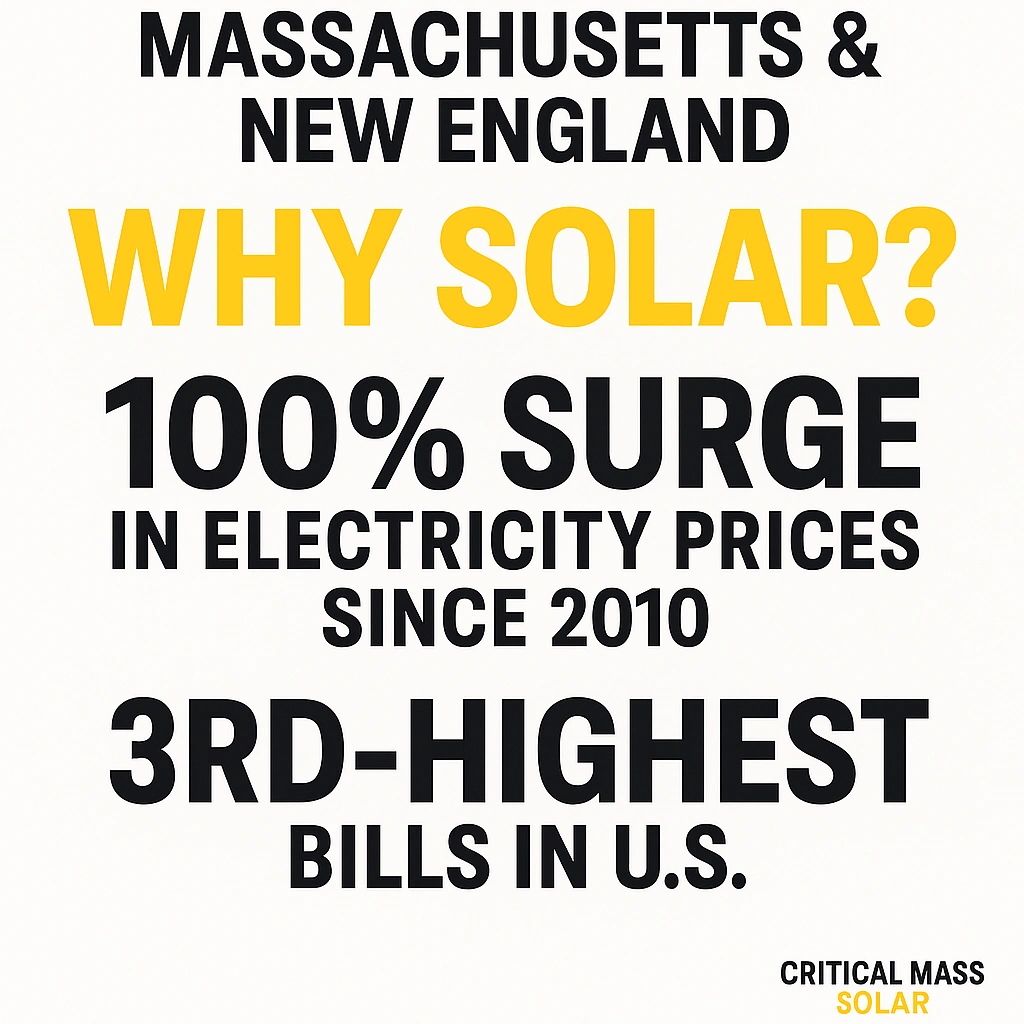
Massachusetts electricity prices have surged over the past decade—up over 100% since 2010, the steepest rise nationally. Here's what it means for solar in MA and NH.
Editor's Note (October 2026): This article was originally published on the date shown. Certain solar tax credits, incentives, and program requirements have since changed. Contact Critical Mass Solar for information about programs currently applicable to your project.
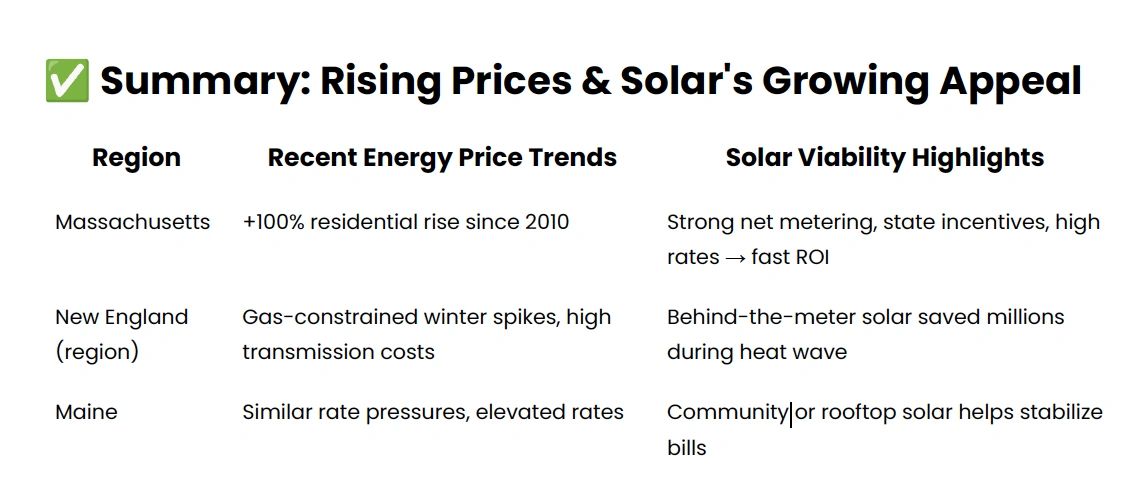
Massachusetts electricity prices have surged over the past decade—up over 100% since 2010, the steepest rise nationally. In 2023, Massachusetts ranked third-highest among U.S. states for residential electricity bills.
Region-wide, New England relies heavily on imported natural gas, with generators paying over $14/MMBtu during winter spikes—more than triple the national average—leading to high wholesale power costs. Infrastructure upgrades have further pushed transmission and distribution expenses up by 800% between 2004–2023.
Energy planners expect another 15% regional rate hike, while Massachusetts utilities have already alerted customers to possible 25% increases.
Why Solar Is Becoming Increasingly Viable
High Electricity Rates Drive Solar Returns
Massachusetts currently has residential rates between $0.24–0.28/kWh; New Hampshire averages $0.22–0.26, and Maine $0.18–0.25. Those elevated rates make rooftop solar pay back much faster—even without federal tax incentives like the 30% Solar Investment Tax Credit.
Behind-the-Meter Solar Reduces Peak Exposure
During a June 2025 New England heat wave, behind-the-meter solar provided up to 22% of total daytime demand, saving consumers at least $8.2 million in avoided wholesale costs when prices spiked past $1,000/MWh.
Massachusetts Policy Is Fueling Solar Growth
Governor Healey's new solar agenda is rolling out $300 million/year in solar programs, removing solar-related billing charges, and accelerating rooftop and community solar deployment. A clean-energy affordability package targets families and businesses hit hardest by utility bills.
Rapid Solar Deployment Across the Region
New England's total solar capacity soared from under 80 MW in 2010 to around 7,300 MW by end-2023, mostly from distributed installations like rooftop PV. In Massachusetts alone, small-scale systems accounted for two-thirds of total solar generation in 2023.
Why Residential & Business Solar Make Sense Now
- For residents and small businesses, solar systems cut dependency on volatile grid rates and shield bills from fuel market swings.
- Community solar offers an alternative for renters or owners whose roofs are unsuitable—a shared project delivers energy credits and savings, even without installing panels onsite.
- Federal and Massachusetts-level incentives—including the SMART incentives and net-metering policies—shorten payback periods to 6–10 years or less.
Solar as a Strategic Hedge & Solution
- Install solar to lock-in low-cost electricity for 25+ years, buffering rate fluctuations.
- Pair with battery/storage or managed-use strategies to consume local generation, avoiding peak charges.
- Leverage community solar programs if rooftop access is limited.
- Stay alert to evolving state solar policy—The Healey administration is actively reducing solar costs and expanding access.
As utility bills climb and energy markets remain unstable, solar isn't just greener—it's smarter. Whether you're a homeowner or a small business, now is one of the most compelling times in New England's history to go solar.
Related news on energy prices & solar policy:

Healey targets energy affordability amid utility bill spikes

Most expensive US states for electricity revealed – with some seeing spikes as high as 101%